Wednesday, January 17, 2007

Will 2008 be 1968 all over again?

Will the 2008 election be a repeat of the 1968 disaster? Here are some thoughts from Casey Blake:
If Iraq looks more like Vietnam with each passing day, the Democratic presidential race may soon come to resemble 1968. Putting race and gender aside for a moment, here's one reading of the top tier: Obama as the Gene McCarthy "new politics" candidate with an upper-middle class base (especially among students at the elite colleges and universities); Edwards the RFK-style centrist moving left in response to poverty and a ghastly war; and Clinton the Humphreyite establishment figure backpedaling from her early support for a war gone wrong.

Of course, historical analogies only go so far in explaining contemporary politics, and race and gender are hardly irrelevant here. But the conflicts that wracked the Democratic Party 40 years ago have never been fully overcome and may yet reemerge in 2008.
He’s right – you can stretch historical analogies only so far but while we are at it does this mean McCain is the new Tricky Dick?

Getting over Frank Hargrove

Republican Frank Hargrove, member of the Virginia House of Delegates, said blacks should just get over the issue of slavery in an interview in the Charlottesville Daily Progress. These remarks, as well as his suggestion that Jews were Christ-killers, have drawn criticism. He has joined former Senator George Allen and Congressman Virgil Goode in the growing circle of Republican politicians who are insensitive to certain segments of our citizenry and seemingly clueless as to how offensive their public comments can be.

Hargrove spoke in response to a resolution proposing a state apology for African enslavement, sponsored by Delegate Don McEachin, a Henrico County Democrat.
“No one is asking any individual to apologize, because certainly there are no slaveholders alive today and there are no slaves alive today,” said McEachin, whose great-grandfather was born a slave.

“But Virginia is alive and well, and Virginia was built on the backs of slaves, and Virginia’s economy boomed because of slavery, and it is Virginia that ought to apologize,” he said.

Some delegates believe an apology is unnecessary and a sign of too much political correctness.

“The present commonwealth has nothing to do with slavery,” said Del. Frank D. Hargrove, R-Glen Allen, whose ancestors were French Huguenots who came to America in search of religious freedom.

How far do these calls for apologies go, wondered Hargrove, a member of the House Rules Committee that could take up McEachin’s resolution as early as Wednesday.

“Are we going to force the Jews to apologize for killing Christ?” Hargrove wondered. “Nobody living today had anything to do with it. It would be far more appropriate in my view to apologize to the Upper Mattaponi and the Pamunkey” Indians for the loss of their lands in eastern Virginia, he said.

A similar request for an apology to Virginia Indians is planned, McEachin said
Virginia, which received its first slaves at Jamestown in 1619, would be the first state to formally apologize for slavery.

Gov. Timothy M. Kaine, a Richmond Democrat, apologized for slavery while mayor of Richmond, said Kevin Hall, Kaine’s press secretary. “He wouldn’t necessarily be opposed to it and certainly he’s got a history of being able to act while in office,” Hall said. A governor’s approval is not required for passage of a joint legislative resolution.

Hargrove said raising the issue is not only symbolic, but “I think it’s counterproductive.” Other Republican delegates kept their views off the record.

“I personally think that our black citizens should get over it,” Hargrove said of slavery, which existed in Virginia from 1619 until the Civil War. “By golly, we’re living in 2007.”
This is from a man who lives in a region that gave rise to the cult of the lost cause. Perhaps Mr. Hargrove should take a drive down Monument Avenue in Richmond. There are a number of statues that stand on the avenue including a number associated with the Civil War. In particular, there are statues of Generals Lee, Jackson and Stuart. Jackson and Stuart, who were killed in battle, face north towards Washington as if preparing to lead a charge. Lee, who survived, faces south with his back to Washington and the federal authority it represents. It seems there other people who have issues to “get over” and the distinguished Delegate should just clam up and…get over it.

Monday, January 15, 2007

Will Bush’s new strategy push Iraq into all-out civil war?

Is a military victory the same as a political victory? Will American troops inadvertently be assisting in the ethnic cleansing that is taking place in and around Baghdad? According to Fareed Zakaria, “The greatest danger of Bush's new strategy, then, isn't that it won't work but that it will—and thereby push the country one step further along the road to all-out civil war.”

Here is Zakaria’s assessment in the January 22nd issue of Newsweek:
Everyone seems quite certain that George W. Bush's new plan for Iraq is bound to fail. But I'm not so sure. At a military level, the strategy could well produce some successes. American forces have won every battle they have fought in Iraq. Having more troops and a new mission to secure whole neighborhoods is a good idea—better four years late than never. But the crucial question is, will military progress lead to political progress? That logic, at the heart of the president's new strategy, strikes me as highly dubious.

Administration officials have pointed to last week's fighting against Sunni insurgents in and around Baghdad's Haifa Street as a textbook example of the new strategy. Iraqi forces took the lead, American troops backed them up and the government did not put up any obstacles. The Wall Street Journal's Daniel Henninger concluded that the battle "looked like a successful test of unified [American-Iraqi] effort."

But did it? NEWSWEEK's Michael Hastings, embedded with an American advisory team that took part in the fighting, reports that no more than 24 hours after the battle began on Jan. 6, the brigade's Sunni commander, Gen. Razzak Hamza, was relieved of his command. The phone call to fire him came directly from the office of Prime Minister Nuri al-Maliki, a Shiite. Lt. Col. Steven Duke, commander of a U.S. advisory team working with the Iraqis, and a 20-year Army veteran, describes Hamza as "a true patriot [who] would go after the bad guys on either side." Hamza was replaced by a Shiite.

Joint operations against Shiite militias are far less likely, and not only because of political interference from the top. Groups like Moqtada al-Sadr's Mahdi Army don't generally start fire fights with the Americans or attack Iraqi forces. Their goals are different, quieter. Another U.S. adviser, Maj. Mark Brady, confirms reports that the Mahdi Army has been continuing to systematically take over Sunni neighborhoods, killing, terrorizing and forcing people out of their homes. "They're slowly moving across the river," he told Hastings, from predominantly Shiite eastern Baghdad into the predominantly Sunni west. If the 20,000 additional American troops being sent to the Iraqi capital focus primarily on Sunni insurgents, there's a chance the Shiite militias might get bolder. Colonel Duke puts it bluntly: "[The Mahdi Army] is sitting on the 50-yard line eating popcorn, watching us do their work for them."

So what will happen if Bush's new plan "succeeds" militarily over the next six months? Sunnis will become more insecure as their militias are dismantled. Shiite militias will lower their profile on the streets and remain as they are now, ensconced within the Iraqi Army and police. That will surely make Sunnis less likely to support the new Iraq. Shiite political leaders, on the other hand, will be emboldened. They refused to make any compromises—on federalism, de-Baathification, oil revenues and jobs—in 2003 when the United States was dominant, in 2005 when the insurgency was raging, and in 2006 when they took over the reins of government fully. Why would they do so as they gain the upper hand militarily?

***
Over the past three and a half years, the dominant flaw in the Bush administration's handling of Iraq is that it has, both intentionally and inadvertently, driven the country's several communities apart. Every seemingly neutral action—holding elections, firing Baathists from the bureaucracy, building up an Iraqi military and police force—has had seismic sectarian consequences. The greatest danger of Bush's new strategy, then, isn't that it won't work but that it will—and thereby push the country one step further along the road to all-out civil war. Only a sustained strategy of pressure on the Maliki government—unlike anything Bush has been willing to do yet—has any chance of averting this outcome.

Otherwise, American interests and ideals will both be in jeopardy. Al Qaeda in Iraq—the one true national-security threat we face from that country—will gain Sunni support. In addition, as American officers like Duke and Brady have noted, our ideals will be tarnished. The U.S. Army will be actively aiding and assisting in the largest program of ethnic cleansing since Bosnia. Is that the model Bush wanted for the Middle East?

The nuances of anti-Americanism

There are people from around the world who disagree with Americans, who distrust Americans, and those who hate Americans. It is important to be able to distinguish between the various shades of anti-Americanism in order to have a fuller understanding of the world and how we interact with one another. There are many Americans who like to lump all dissenters into one huge group creating a huge boogey man to increase the sense of victim-hood and self-righteousness.

A couple of scholars have examined the issue and have come up with no less than four distinct anti-Americanisms. Not only that but their data suggests that anti-Americanism is not as widespread or as deep-seated as many believe. Neil Gross examines their work in the Boston Globe:
… is anti-American sentiment as rampant as it seems? In their new edited volume, "Anti-Americanisms in World Politics" (Cornell University Press), international relations scholars Peter Katzenstein and Robert Keohane bring together a distinguished group of social scientists to consider how much anti-Americanism there is, and whether, in fact, anti-Americanism is any one thing at all.

The plural "anti-Americanisms" in the book's title reveals its core insight: Anti-Americanism is not a single, unitary phenomenon. Instead, Katzenstein and Keohane suggest there are four distinct strains.

The first, liberal anti-Americanism, appears in democracies like France or England. Here opposition to American policies often involves the charge that the United States is being hypocritical by not living up to its professed values and ideals -- values its critics share. When Europeans express outrage over the treatment of prisoners by US military personnel in Guantanamo Bay, or in secret detention centers abroad, these are examples of liberal anti-Americanism. How can a country that says it stands for freedom condone such obvious abuses of human rights?

The second strain, social anti-Americanism, comes from critics of the United States who are staunch supporters of the social welfare state, and thus oppose American economic policy because it promotes laissez-faire ideals and erodes welfare state protections. Social anti-Americanism is at play when Bolivian President Evo Morales, for example, rails against American-led globalization on the grounds that, among other things, it exposes people to the vicissitudes of the market.

More dangerous, according to the editors, are the two remaining strains. Sovereign-nationalist anti-Americanism, which may be found in parts of Latin America and Asia, involves opposition to American geopolitical and cultural dominance on the grounds that they are threats to national identity and strategic interests, as can be seen in Chinese saber-rattling over Taiwan. Radical anti-Americanism, meanwhile, of the kind typically associated with Islamic fundamentalism, holds, according to Katzenstein and Keohane, that "America's identity" must be "transformed, either from within or without."

Too often commentators who have written on anti-Americanism make do with anecdotal evidence: The burning of an American flag, or a chilly electoral climate for politicians who are seen as kowtowing to United States interests, are taken as signs that anti-Americanism is on the rise. By contrast, most contributors to the Katzenstein and Keohane volume rely on quantitative evidence from large-scale social surveys. Two especially noteworthy findings emerge.

First, fewer people around the globe hate the United States than might be imagined. As political scientist Giacomo Chiozza notes in a chapter analyzing data from a survey carried out in 44 countries in 2002, 43 percent of respondents worldwide said they had a "somewhat favorable" view of the United States, and 21 percent said they had a "very favorable" view. To be sure, anti-American sentiment is strong in some countries and regions. In the Middle East, for example, three quarters of respondents had negative views of the United States overall. But in France and Germany, more than 60 percent of respondents had positive views of the United States.

What's more, even where anti-American sentiment is high, people often express appreciation for aspects of American society. While 70 percent of respondents in the Middle East held negative views of the United States war on terror, only about one-quarter said they did not admire the advances made by the United States in science and technology. Similarly, while 57 percent of Egyptians said they disliked American popular culture, a third said they appreciated American ways of doing business. Radical anti-Americanism, encompassing dislike of the United States on all fronts, is rare, and in general there is more dislike for American policies than for the American people.

Second, in most countries, anti-Americanism involves more distrust than outright bias. The distinction is crucial. Where there is distrust, people may be skeptical of US motives and claims, but are open to considering the American point of view. Anti-American bias, by contrast, occurs when policies and actions undertaken by the US government and American corporations are seen as expressions of an unchangeable national identity and character, such that dialogue over disagreements is deemed to have no value.
You can read the entire article here.

Sunday, January 14, 2007

Is it simply a matter of time before the United States suffers another terrorist attack?

While the Bush administration’s attention is focused on saving face and salvaging its Iraq policy, the danger of another terrorist attack on American in the United States is increasing. Henry Crumpton, the outgoing terror coordinator for the State Department, says the United States is losing ground against Islamic extremists and expects future terrorist attacks.

This is from Michael Isikoff in the January 22nd issue of Newsweek:
Intel director john Negroponte gave Congress a sobering assessment last week of the continued threats from groups like Al Qaeda and Hizbullah. But even gloomier comments came from Henry Crumpton, the outgoing State Department terror coordinator. An ex-CIA operative, Crumpton told NEWSWEEK that a worldwide surge in Islamic radicalism has worsened recently, increasing the number of potential terrorists and setting back U.S. efforts in the terror war. "Certainly, we haven't made any progress," said Crumpton. "In fact, we've lost ground." He cites Iraq as a factor; the war has fueled resentment against the United States.

Crumpton noted some successes, such as improved joint efforts with foreign governments and a weakening of Al Qaeda's leadership structure. But he warned of future attacks. "We don't want to acknowledge we're going to get hit again in the homeland, but we are," he said. "That's a hard, ugly fact. But it's going to happen." Crumpton cited no specific intel, but said the most worrisome scenarios involve lone operatives who slip into the country and take directions through cyberspace. "How do you penetrate that?" he asked. Citing family financial pressures, Crumpton leaves office in two weeks. A State official, anonymous when discussing personnel matters, said no one has been nominated to replace him, so it could be a while before the post—a top counterterror job—is filled.

Saturday, January 13, 2007

Bush’s Iraq proposal: “The most dangerous foreign policy blunder in this country since Vietnam…”

President Bush’s proposal is drawing little, if any, support around the country or internationally. The administration is telling the world it now should be trusted for the way out of the crisis that it is largely responsible for creating. Even Republicans are unhappy with the administration’s current and proposed policies pertaining to Iraq and the Middle East. The latest proposal is what conservative Republican Senator Chuck Hagel has called the most dangerous foreign policy blunder in this country since Vietnam.

Here is an assessment from Der Spiegel:
George W. Bush's last attempt to win the war in Iraq is meeting with strong resistance. His own party is criticizing him with brutal openness, calling his new ideas for Iraq a disaster. Bush is almost completely isolated -- like Richard Nixon during his final days in office.

Bush is facing opposition to his Iraq policy.

Chuck Hagel, the Republican senator from Nebraska, has ambitions to move into the White House. And since the race for electoral victory in 2008 has already begun, Mr. Hagel has no more time for losers -- even if one of those losers happens to be George W. Bush, his own president.

That became brutally clear on Thursday in the Senate Foreign Affairs Committee, which invited Secretary of State Condoleeza Rice to explain President Bush's newest approach to Iraq. Despite being at pains to perform well, the conscientious emissary didn't get very far -- especially since five designated presidential candidates are sitting on the committee.

Hagel scathingly described the strategy outlined by Bush in his address to the nation, televised on Wednesday, as "the most dangerous foreign policy blunder in this country since Vietnam, if it's carried out." Poor Rice sat wordlessly across from him, her face frozen in a trenchant and grim expression. Scornful applause filled the room -- an unheard of reaction in itself.

Himself a veteran of the US war in Vietnam, Hagel was not alone. It was clear none of the newly confident congressional Democrats would jump onto Bush's proposed Baghdad express, which Senator Joe Biden called a "tragic mistake."

But what about the Republicans? One after another, they severed their allegiance to Bush and slated his plans for Iraq. Rather than sighs of relief, all Bush got after his stated decision to send an additional 21,500 US troops to Iraq were evil tidings. Ronald Reagan's former chief of staff Ken Duberstein characterized Bush's strategy as "exceptionally hard to accomplish."

An additional 21,500 troops? Still more billions of dollars for reconstruction? A fresh diplomatic offensive? "I've gone along with the president on this and I've bought into his dream and at this stage of the game I just don't think it's going to happen," said Republican Senator George Voinovich, sounding bitter and resigned.

Those were sobering words. Sure, Bush knew only too well that his blueprint for saving Iraq and himself -- his last attempt, presumably -- would be exposed to political crossfire. "We understand that people are going to be skeptical," said Whitehouse spokesman Gordon Johndroe on Thursday, adding that he hoped they would "take a look at the details of the president's plan."

That's exactly what people did -- and they rejected the details. They rejected the notion that dispatching additional troops to Iraq would require expanding the US military by 92,000 soldiers in the long term -- a project that would cost about $15 billion a year. They also rejected the proposal of mobilizing the National Guard again, as well as the suggestion that parts of Baghdad need to be hermetically sealed off from the rest of the city -- a tactic that already led to "spectacular failure" in Vietnam, as the Los Angeles Times observed.

And yet the president made an obvious effort to introduce unusually humble phrases into this speech in order to win the audience back over to his side. He used the word "mistake" -- a taboo for him, at least until now. He spoke about "failure." He didn't speak about a possible "victory" any longer, but only about "success." And then, at noon on Thursday, he quickly flew to Fort Benning in Georgia in order to stand cheerfully in front of uniformed soldiers and praise the achievements of the Third Infantry Division "that took up the sledgehammer to help liberate Baghdad" -- a vision of victory that has long since faded.
You can read the entire article here.

Friday, January 12, 2007

President Bush’s “new way forward”

After listening to President Bush’s speech the other night on his “new way forward” in Iraq I could not help but feel he believes he has access to a time machine that can go backwards in time and start all over again. The proposal to increase troop strength by the numbers he is proposing would have made sense years ago when it would have made a difference. However, because the troops weren’t there when they were needed a new dynamic in Iraq has developed. It is as if the last four years has made no difference in the President’s thinking.

He is now touring the country to use all the persuasive powers at his command he used a year or so ago in his campaign to privatize Social Security to convince the country of the wisdom of his plan. Unfortunately for him, two-thirds of the country is already opposed to him only days after the unveiling of his plan. Why so much opposition so soon? It’s because the plan’s faults are so easy to see. Suzanne Nossel, in Democracy Arsenal, points out a few she spotted right away :
1. That the strategy is "new" - Bush referred directly to the "clear, hold and build" strategy promulgated in October …. At best, this is a course-correction which has unaccountably taken more than 15 months to be put into effect.

2. That the strategy is any more likely to work now than in the past - Bush made two arguments as to why what failed previously will succeed now: 1) that troop levels will now be sufficient and 2) that crippling restrictions on troop movements and maneuvers will be lifted. But rather than citing evidence for either of these, Bush made only a stilted reference to military commanders having certified to their truth. This less than a week after replacing the leaders who refused to attest to same.

3. That the strategy is "Iraqi" in impetus or direction - While Bush clearly wants to claim that the escalation of US troops will happen in support of a renewed Iraqi effort to secure itself, this is bunk. Bush is under desperate pressure to do something - anything - about Iraq. This plan is as made-in-Washington as they come, right down to the predicate laid to avoid blame for the White House. Bush is setting himself up to be able to claim that the al-Maliki government failed to come
through in the crunch, even though such failure is painfully, unavoidably foreseeable from the outset.

4. That 20,000 troops will somehow change the game - The worst part of Bush's plan is that an additional 20,000 US soldiers will risk life and limb in furtherance of a "strategy" that is doomed to fail. Baghdad is a city of roughly 5 million people. The 20,000 figure is driven not by any assessment of what it would take to do the job, but by tight recruitment constraints and a straightforward political calculus of what the American public might ht possibly bear.

5. That the Iraqi government enjoys sufficient legitimacy and impartiality to curb sectarian violence - Central to Bush's plan is the ability of the Iraqi government to credibly assert itself against the militias. But the Iraqi armed services are themselves riddled with partisan militants. It is a Shia army with close links to the radical Sadr militia - the idea of their going "door to door" in Sunni neighborhoods of Baghdad can only strike fear among residents.

6. That the al-Maliki government is a reliable US ally - While Bush has repeatedly affirmed his faith in AL-Milk, his advisers have grave doubts about the trustworthiness of the Prime Minister. Milk's links to Sadr, his mishandling of Saddam's execution, his failure to take control of errant ministries, his impetuous decisions affecting US military operations emblems the difficulties of forging the sort of partnership that Bush seems to be banking on.

7. That the Iraqi military has the competence to take the lead in securing Baghdad - For anyone who somehow harbors notions about the capabilities of the Iraqi security forces, a quick read of the Iraq Study Group Report will dispel such notions in devastating terms. Army units are described as lacking personnel, equipment and leadership and as resistant to carrying out orders. The Iraqi police are described as "substantially worse."

8. That the terrorists and insurgents are wholly separable from the Iraqi population at large - The strategy refers repeatedly to clearing neighborhoods of insurgents. But what allows radical militias to survive is the support and protection they receive from ordinary citizens who are sympathetic to their aims. Until such backers buy into a political resolution of Iraq's strife, they will continue to support and breed the insurgency, making it impossible for US or Iraqi troops to root out.

9. That the US is in a position to "provide" a political alternative to the Middle East - It's astounding and distressing to hear Bush continue to talk in terms of the US "advancing liberty" in the Middle East through means like the Iraq war. While Bush references standing with regional actors pressing for their own freedoms, he stops well short of acknowledging the kind of broad shift of ambitions and tactics needed to guide a new US Middle East policy.

10. That disaster is still avoidable - Bush cited a series of reasons why failure in Iraq would be a disaster: because Islamic extremists would grow in strength; because Iran would be emboldened to pursue nukes; because Iraq could become a terrorist haven. But all those developments are underway right now.

Fighting insurgencies

Little is new under the sun including U.S. efforts fighting insurgencies with limited success while political leaders proclaim light at the end of the tunnel.

Here are Marc Cooper’s thoughts on President Bush’s speech and his reminder of insurgencies the United States has fought in the past half century:
Those who were able to pay attention to the President's words and who were able to peer beneath the surface of his rhetoric would find this theoretical foundation: we've screwed up until now but finally we are going to implement a viable hearts-and-minds counter-insurgency strategy. More than a few windbags on the gab shows argued that some of the better and bigger thinkers in the Pentagon were finally going to get their way and take seriously a more winning strategy.

But such a notion doesn't withstand any historical scrutiny. Sure, every ten years or so, the American military establishment re-discovers the keys to winning wars of insurgency. And yet every time they implement these genius ideas they fail over and over again.

Indeed, can someone tell me the last time the U.S. actually won such a war? For 40 years (starting in the late 50's) we backed a counter-insurgency plan in Guatemala and...well.. it dragged on for 40 years. Some 80,000 lives were expended in the meantime. The war was ended through political/diplomatic efforts.

Then came Vietnam. And in spite of popular mythology, we were militarily defeated by the insurgency in that country. The cost: 3 million lives. And the Communist Party is still in power.

El Salvador? I sat in many a briefing by U.S. military officials, usually Vietnam vets, who swore they were implementing the lessons learned from Vietnam. Back then we we heard the same baloney about the Duarte government that we hear today about Maliki i.e. he may be a turd but he's our turd. Not to worry, under our mounting pressure our client government will eventually become civilized and effective. Just as Bush vows that Mailiki will shut down the militias, Reagan swore that Duarte would eventually reign in the death squads (until, that is, the death squad party won the presidency). Meanwhile a guerrilla army of less than 10,000 peasant fighters successfully resisted the U.S. strategy for a dozen years. The war ended only when a U.N. brokered political settlement was reached. The cost: another 80,000 lives.

In Nicaragua we spent hundreds of millions supporting, training and directing the contra insurgency. And to no avail. The contras were forced to demobilize under the terms of the Contadora agreement, a diplomatic initiative pushed primarily by Costa Rica. The war ended through a political/diplomatic solution. The cost: 50,000 lives. And the guy we tried to overthrow was re-elected and sworn back into power last week.

Now, Iraq. And the same recycled reassurances of turning points and breathroughs.

Thursday, January 11, 2007

The world’s twelve worse ideas for 2007

Fred Halliday has identified the twelve worse ideas for 2007 in Open Democracy. In summary, they are:
Number twelve: Human behaviour can be
predicted

Number eleven: The world is speeding up

Number ten: We have no need for history

Number nine: We live in a "post-feminist"
epoch

Number eight: Markets are a "natural" phenomenon which allow for the efficient allocation of resources and preferences

Number seven: Religion should again be allowed, when not encouraged, to play a role in political and social life

Number six: In the modern world, we do not need utopias

Number five: We should welcome the spread of English as a world language

Number four: The world is divided into incomparable moral blocs, or civilisations

Number three: Diasporas have a legitimate role to play in national and international politics

Number two: The only thing "they" understand is force

Number one: The world's population problems, and the spread of Aids, can be solved without the use of condoms
Read the details pertaining to each bad idea here.

Wednesday, January 10, 2007

President Bush’s speech

I watched President Bush’s speech tonight with a great deal of hope that this new proposal might actually work. However, there is a very slim chance it will. This president has made one bad decision after another. There is no question Iraq is in a terrible mess but there may be limits to how much good, if any, Americans can accomplish there. Basically, the speech left more questions than answers, let alone reassurances.

Is the presence of American troops attracting violent elements to the country or are they keeping the lid on a situation that will deteriorate even more into civil war if and when the Americans leave? This is a big question in my mind. As bad as the situation is, it can get much worse. On the other hand, I believe most Iraqis don’t care about any good intentions by American troops – the bottom line is Americans are foreign occupiers. As the Iraqis see it, the Americans may have toppled the tyranny but they have allowed chaos and anarchy to rule the country since.

Is this too little too late? I’m afraid that is almost a given. Four years of disastrous efforts at reconstruction by private American contractors and four years of the absence of security are not going to be suddenly turned around in a matter of a few months. Too much damage has been done – not the least of which has been to American credibility. In all honesty, why should the Iraqi people trust us now?

Is this administration simply writing off Afghanistan? Al Qaeda and the Taliban forces have escalated attacks against NATO and the Afghan government over the past year. According to the Baltimore Sun, commanders in Afghanistan expect a major offensive this spring. If there is such a thing as a “war on terrorism” then Afghanistan is where it is being fought.

There is no exclusively military solution to any conflict. Politics is always at the beginning, middle and end of every war. This means a diplomatic outreach to the entire region, including Iran and Syria. This means putting pressure on the Maliki government to clean up its act. This also means making these efforts in Iraq and the region international. Unilateralism is symptomatic of a failure of international leadership. Unilateralism has divided our friends and united our enemies. Unilateralism has been, and remains, the policy of the Bush administration.

Overall, is this President in touch with reality? We have reached this terrible situation for one reason and one reason alone – his administration’s failure acknowledge reality and make appropriate and timely changes in strategy and policy. What this president is asking us to do is to ignore his history of bad decisions, to believe he has suddenly become wise, and to therefore rally behind his proposal.

Andrew Sullivan sums it up this way:
The premise of the speech, and of the strategy, is that there is a national democratic government in Baghdad, defending itself against Jihadist attacks. The task, in the president's mind, is therefore to send more troops to defend such a government. But the reality facing us each day is a starkly different one from the scenario assumed by the president. The government of which Bush speaks, to put it bluntly, does not exist. The reality illumined by the lynching of Saddam is that the Maliki government is a front for Shiite factions and dependent for its future on Shiite death squads. U.S. support for the government is not, therefore, a defense of democracy in a unified country, whatever our intentions. It is putting the lives of American soldiers in defense of the Shiite side in an increasingly brutal civil war.

What we will discover in the next few months, therefore, is simply whether the entire premise of this strategy is actually true. The president is asking us to find this out one more time. He seems to disbelieve the overwhelming evidence on the ground - that the dynamic has changed beyond recognition. His intellectual rubric - democracy versus terror - has not changed to deal with fast-changing events, or to take account of the sectarian dynamic that his appallingly managed occupation has spawned. And so his strategy is no surprise. It would have made sense in 2004, when so many of us were begging for more troops, only to be dismissed as fair-weather warriors, terror-supporters, or lily-livered wimps. We were right. This president was disastrously wrong - and clung to his disproved strategy in the face of overwhelming evidence, supported by the Republican right regardless, until it simply became impossible to sustain the lie any longer.

Tuesday, January 09, 2007

Richmond Sunlight tracking the Virginia General Assembly

Waldo Jaquith has developed a new web site, Richmond Sunlight, to track legislation and other goings on of the Virginia General Assembly. Waldo has turned the site over to the Virginia Interfaith Center to maintain.

Check it out – it appears it will be a very useful tool in following the General Assembly. We all owe thanks to Waldo for the work he has done. And remember the citizens of the Commonwealth are never safe when the Virginia General Assembly is in session – we need to pay attention. Let the sun shine in.

Bushisms for 2006

Here are the top ten Bushisms for 2006 compliments of Political Wire:
1. I'm the Decider.
2. I use The Google.
3. It was not always certain that the U.S. and America would have a close relationship.
4. I've got an ek-a-lec-tic reading list
5. The only way we can win is to leave before the job is done.
6. Stay the course.
7. When the final history is written on Iraq, it will look just like a comma.
8. The Congress was right to renew the Terrorist Act.
9. I want to be a war president; no president wants to be a war president.
10. The fiscal year that ended on February the 30th.

The destruction of Zimbabwe under Mugabe’s tyranny

The brutal tyranny of President Robert Mugabe has practically destroyed Zimbabwe as reported here before. Consider these statistics from that central African country: eighty percent unemployment; an inflation rate of 1050%; an estimated 29% of sexually active persons are positive for HIV; and a life expectancy that was 62 in 1990 has plummeted to 37 for men and 34 for women in 2004. This disaster is entirely man-made, specifically the results of the Mugabe regime. He has destroyed the economy and made it extremely dangerous for any opposition to his rule. It is a human disaster on scale with or surpassing Iraq and Dafur yet receives very little attention.

This is from RW Johnson in the London Times:
Suffer the little children is a phrase never far from your mind in today’s Zimbabwe. The horde of painfully thin street children milling around you at traffic lights is almost the least of it: in a population now down to 11m or less there are an estimated 1.3m orphans.

Go to one of the overflowing cemeteries in Bulawayo or Beit Bridge and you are struck by the long lines of tiny graves for babies and toddlers.

A game ranger friend tells me that hyena attacks on humans, previously unheard of, have become increasingly common. “So many babies, not all of them dead, are being dumped in the bush that hyenas have developed a taste for human flesh,” he explains.

Under the weight of the general economic meltdown — the economy has shrunk by 40% since 2000 and is still contracting — the health system has collapsed and a populace now weakened by five consecutive years of near-starvation dies of things which would never have been fatal before. A staggering 42,000 women died in childbirth last year, for example, compared with fewer than 1,000 a decade ago.

A vast human cull is under way in Zimbabwe and the great majority of deaths are a direct result of deliberate government policies. Ignored by the United Nations, it is a genocide perhaps 10 times greater than Darfur’s and more than twice as large as Rwanda’s.

Genocide is not a word one should use hastily but the situation is exactly as described in the UN Convention on Genocide, which defines it as “deliberately inflicting on the group conditions of life calculated to bring about its physical destruction in whole or in part”.

Reckoning the death toll is difficult. Had demographic growth continued normally, Zimbabwe’s population would have passed 15m by 2000 and 18m by the end of 2006. But people have fled the country in enormous numbers, with 3m heading for South Africa and an estimated further 1m scattered around the world. This would suggest a current population of 14m. But even the government, which tries to make light of the issue, says that there are only 12m left in Zimbabwe.

Social scientists say that the government’s figures are clearly rigged and too high. Their own population estimates vary between 8m and 11m. But even if one accepted the government figure, 2m people are “missing”, and the real number is probably 3m or more. And all this is happening in what was, until recently, one of Africa’s most prosperous states and a member of the Commonwealth.
You can read the entire article here.

Monday, January 08, 2007

The surge in Iraq

President “bring-them-on” Bush is expected to propose a “surge” of 20,000 additional American troops into Iraq – particularly in Bagdad – to stabilize the situation and buy time for the Iraqi government to take control of the country. In other words, do in the next few months what we have failed to do in the past four years.

The desire to make the streets of that country safe for its people is so strong to almost make one willing to try anything just to make it right. Unfortunately, this administration is obviously less concerned about making it right than saving face. Based upon past experience we can neither trust what President Bush has to say or his judgment to make wise decisions.

The current policy is certainly a failure. Will a surge work? It does not look promising. Withdrawal may very well release the forces of full scale civil war. This is a terrible situation for us to be in but the consequences are far worse for the Iraqi people.

This is James Fallows’ assessment in The Atlantic of why a surge is a bad idea:
The proposition that Iraq can be “fixed” by an increase in troop numbers that is (a) modest enough not to require a huge re-mobilization and reconfiguration of U.S. deployments around the world, and (b) brief enough to count as a “surge” rather than an “escalation” or “re-invasion,” is fantasy.

To be more precise, the argument that it will work rests on elements each one of which is reasonable but that together do not constitute a case for increasing rather than decreasing America’s stake in Iraq. These include: the unstated (by the Administration) recognition that the current course is failing; the belated admission (though again, not publicly by the Administration) that more troops might have made a big difference four years ago; the knowledge that David Petraeus, the newly appointed ground commander for Iraq, has been heavily involved in internal military efforts to lay out a more successful counter-insurgent strategy; and the ever-tempting and always-misleading “next six months will be decisive” fallacy.

Conceivably 20,000 U.S. troops could make things look better around Baghdad for a brief enough time to let the Administration declare “success” and turn things over to the Iraqis. Conceivably. But not probably; if anything, it’s more likely that more troops will mean more targets for IEDs, more large-scale urban combat (with all that does to win “hearts and minds”), and an even higher-stakes disaster. The former Special Forces officer W. Patrick Lang and the former Pentagon budget analyst/ revolutionary-for-truth Franklin “Chuck” Spinney have each recently made this point, in two separate posts both called “Stalingrad on the Tigris.” …

And if it’s unlikely that a “surge” would improve circumstances in the short term, it is inconceivable that a relatively small increase in troops, even with leadership that has learned from nearly four years of gross errors, could reverse the situation in the largest sense.

The country would be doing the wrong thing — another wrong thing — in increasing rather than decreasing its exposure to the disaster it has helped create. It is hard to imagine that this is what the public was voting for two months ago.

Sunday, January 07, 2007

Expanding Presidential powers at the expense of our democracy and civil liberties

There are a number of things the Bush-Cheney Administration will be remembered for – few, if any, positive -- and one of those will be the drive to expand the power of the executive branch of our government at the expense of our democracy and civil liberties. As noted here before, President Ford’s pardon of his predecessor, President Richard Nixon, for all potential charges related to his abuse of presidential power, set a very bad precedent. Presidents are not above the law and should be held accountable. Our federal system is one of checks and balances -- not what the President decides is balanced.

This is an editorial from Sunday's New York Times:
Observing President Bush in action lately, we have to wonder if he actually watched the election returns in November, or if he was just rerunning the 2002 vote on his TiVo.

That year, the White House used the fear of terrorism to scare American voters into cementing the Republican domination of Congress. Mr. Bush and Vice President Dick Cheney then embarked on an expansion of presidential power chilling both in its sweep and in the damage it did to the constitutional system of checks and balances.

In 2006, the voters sent Mr. Bush a powerful message that it was time to rein in his imperial ambitions. But we have yet to see any sign that Mr. Bush understands that — or even realizes that the Democrats are now in control of the Congress. Indeed, he seems to have interpreted his party’s drubbing as a mandate to keep pursuing his fantasy of victory in Iraq and to press ahead undaunted with his assault on civil liberties and the judicial system. Just before the Christmas break, the Justice Department served notice to Senator Patrick Leahy — the new chairman of the Judiciary Committee — that it intended to keep stonewalling Congressional inquiries into Mr. Bush’s inhumane and unconstitutional treatment of prisoners taken in anti-terrorist campaigns. It refused to hand over two documents, including one in which Mr. Bush authorized the Central Intelligence Agency to establish secret prisons beyond the reach of American law or international treaties. The other set forth the interrogation methods authorized in these prisons — which we now know ranged from abuse to outright torture.

Also last month, Mr. Bush issued another of his infamous “presidential signing statements,” which he has used scores of times to make clear he does not intend to respect the requirements of a particular law — in this case a little-noticed Postal Service bill. The statement suggested that Mr. Bush does not believe the government must obtain a court order before opening Americans’ first-class mail. It said the administration had the right to “conduct searches in exigent circumstances,” which include not only protecting lives, but also unspecified “foreign intelligence collection.”

The law is clear on this. A warrant is required to open Americans’ mail under a statute that was passed to stop just this sort of abuse using just this sort of pretext. But then again, the law is also clear on the need to obtain a warrant before intercepting Americans’ telephone calls and e-mail. Mr. Bush began openly defying that law after Sept. 11, 2001, authorizing the National Security Agency to eavesdrop without a court order on calls and e-mail between the United States and other countries.


News accounts have also reminded us of the shameful state of American military prisons, where supposed terrorist suspects are kept without respect for civil or human rights, and on the basis of evidence so deeply tainted by abuse, hearsay or secrecy that it is essentially worthless.

Deborah Sontag wrote in The Times last week about the sorry excuse for a criminal case that the administration whipped up against Jose Padilla, who was once — but no longer is — accused of plotting to explode a radioactive “dirty bomb” in the United States. Mr. Padilla was held for two years without charges or access to a lawyer. Then, to avoid having the Supreme Court review Mr. Bush’s power grab, the administration dropped those accusations and charged Mr. Padilla in a criminal court on hazy counts of lending financial support to terrorists.

But just as the government abandoned the “dirty bomb” case against Mr. Padilla, it quietly charged an Ethiopian-born man, Binyam Mohamed, with conspiring with Mr. Padilla to commit that very crime. Unlike Mr. Padilla, Mr. Mohamed is not a United States citizen, so the administration threw him into Guantánamo. Now 28, he is still being held there as an “illegal enemy combatant” under the anti-constitutional military tribunals act that was rushed through the Republican-controlled Congress just before last November’s elections.

Mr. Mohamed was a target of another favorite Bush administration practice: “extraordinary rendition,” in which foreign citizens are snatched off the streets of their hometowns and secretly shipped to countries where they can be abused and tortured on behalf of the American government. Mr. Mohamed — whose name appears nowhere in either of the cases against Mr. Padilla — has said he was tortured in Morocco until he signed a confession that he conspired with Mr. Padilla. The Bush administration clearly has no intention of answering that claim, and plans to keep Mr. Mohamed in extralegal detention indefinitely.


The Democratic majority in Congress has a moral responsibility to address all these issues: fixing the profound flaws in the military tribunals act, restoring the rule of law over Mr. Bush’s rogue intelligence operations and restoring the balance of powers between Congress and the executive branch. So far, key Democrats, including Mr. Leahy and Senator Richard Durbin of Illinois, chairman of a new subcommittee on human rights, have said these issues are high priorities for them.

We would lend such efforts our enthusiastic backing and hope Mr. Leahy, Mr. Durbin and other Democratic leaders are not swayed by the absurd notion circulating in Washington that the Democrats should now “look ahead” rather than use their new majority to right the dangerous wrongs of the last six years of Mr. Bush’s one-party rule.

This is a false choice. Dealing with these issues is not about the past. The administration’s assault on some of the nation’s founding principles continues unabated. If the Democrats were to shirk their responsibility to stop it, that would make them no better than the Republicans who formed and enabled these policies in the first place.

Why our long national nightmare never ended

The recent passing of the late President Gerald Ford generated a lot of gushing about what a wise man he was and how he helped heal the nation by pardoning Nixon. However, the issues of abuse of Presidential power have never really gone away. On the contrary, rather than healing the nation the pardon established a precedent of placing the President above the law. Over a quarter of a century later we are still struggling over issues of Presidential power and are burdened by an administration that believes its actions are above review. Thank you, Mr. Ford.

Matt Welch in today’s L.A. Times sees it this way:
WHEN President Ford announced in his brief and sober inaugural address that "our long national nightmare is over," it wasn't just an attempt to lay the turbulent Nixon presidency to poetic rest. It was also a bit of wish-casting about the nation's deep partisan divisions heading forward. As the man who coined the phrase, Robert T. Hartmann, once said of the speech, it was intended to "bridge — but also divide — the past and the future."

But the future didn't cooperate, as Hartmann himself was soon to discover bitterly during his tenure as Cabinet-level counselor to the president. Two other Ford administration heavyweights — Nixon holdovers Donald Rumsfeld and Dick Cheney — outmaneuvered Ford's most trusted lieutenant in launching what would become a career-long struggle to maintain and expand the powers of the executive branch against what they saw as a feckless Congress and media. This constitutional blood-feud continues to fundamentally shape the way the United States is governed today."

At the end of the Nixon administration, you had the nadir of the modern presidency in terms of authority and legitimacy," Vice President Cheney told reporters in December 2005, in defense of the National Security Agency's possibly illegal wiretapping of American citizens. In January 2002, Cheney told ABC's Cokie Roberts: "I feel an obligation, and I know the president does too … to pass on our offices in better shape than we found them to our successors. We are weaker today as an institution because of the unwise compromises that have been made over the last 30 to 35 years."

The Bush-Cheney administration has systematically limited or flouted many of the post-Watergate laws introduced by the reform-minded Congress of 1974. The NSA wiretapping program, for example, circumvents the Foreign Intelligence Surveillance Act that Cheney and Rumsfeld (along with then-CIA Director George H.W. Bush) lobbied against during the Ford era. The Presidential Records Act, prompted by Richard Nixon's attempts to destroy his files and recordings, was gutted by President George W. Bush in 2002, when he gave all his predecessors unlimited veto power over what had been automatic declassifications. And the Freedom of Information Act, which was greatly strengthened in 1974 over Ford's veto (even though he had supported the update as a congressman), was limited by then-Atty. Gen. John Ashcroft in October 2001, when he instructed federal agencies to err on the side of nondisclosure.

Activities that shocked the country 32 years ago are now being codified into law, at the behest of the Ford administration veterans. Just last month, Bush claimed in a signing statement for a new postal law that the FBI has a right to open your mail without permission from a judge; in 1974, revelations that the CIA had been rifling through letterboxes helped trigger the landmark Church Commission hearings — which Cheney tried to block.

Hartmann, a Times reporter from 1939 to 1964 (with time out for service in the Navy during World War II), was no fan of the Nixon staffers, who he derisively referred to as "the Establishment." He blamed them for Ford's 1976 defeat and warned about their influence early in the Reagan era. Rumsfeld, he thought, was a cunning opportunist, while his sycophantic assistant Cheney, according to Hartmann's 1980 memoir, was "somewhat to the right of Ford, Rumsfeld or, for that matter, Genghis Kahn."

The feeling was mutual. Rumsfeld eventually undermined Hartmann by arguing successfully that the counselor's office — which shared a door with Ford's — should be converted into a presidential study. Cheney, dissatisfied with the speeches Hartmann was writing for the president (especially a historic April 1975 Tulane University address in which Ford declared the Vietnam War was "finished as far as America is concerned"), simply created his own separate speechwriting shop. And Nixon Chief of Staff Alexander Haig landed the most lasting blow of all by working around the counselor to discuss with then-Vice President Ford the possibility of pardoning the outgoing chief executive.

Last week, Ford was buried to eulogies from Rumsfeld, Cheney, Henry Kissinger and both Bushes. The sentiments from official Republican Washington seemed nearly unanimous — the antidote to Watergate was "healing," and the man from Michigan's greatest single act was giving a blanket pardon to the president who had done the most to accumulate and abuse executive power in modern history.

Even as they spoke, news was breaking about the Bush administration's latest assertion of unreviewable executive privilege — refusing to tell Congress how the CIA interrogates prisoners. Hartmann, now 89 years old, sat silently in the audience.

Saturday, January 06, 2007

Freeing the military from the Republican Party grip

There was an interesting article last week in Military Times about their survey indicating only 35% of the men and women in uniform support President Bush’s handling of the war in Iraq – down from 63% in 2004. However, the numbers may reflect more than disgust with Bush’s bungling in the Middle East. Rosa Brooks believes there is a shift going on away from the Republican Party among U.S. soldiers and sailors who became disproportionately identified with the GOP during the past quarter century compared to the U.S. population in general.

Here is her piece in the L.A. Times:
BURIED IN THE NEWS last week was one of the most potentially significant stories of recent years. The Military Times released its annual poll of active-duty service members, and the results showed something virtually unprecedented: a one-year decline of 10 percentage points in the number of military personnel identifying themselves as Republicans. In the 2004 poll, the percentage of military respondents who characterized themselves as Republicans stood at 60%. By the end of 2005, that had dropped to 56%. And by the end of 2006, the percentage of military Republicans plummeted to 46%.

The drop in Republican Party identification among active-duty personnel is a sharp reversal of a 30-year trend toward the "Republicanization" of the U.S. military, and it could mark a sea change in the nature of the military — and the nature of public debates about national security issues.

For most of U.S. history, issues of national security rarely divided Americans along sharp party lines: The old adage that "politics ends at the water's edge" generally held true. The military, while institutionally conservative with a small "c," was not closely identified with a particular political party. But somewhere between the end of the Vietnam War and the middle of the Clinton era, the U.S. military began to look like a wholly-owned subsidiary of the Republican Party.

The rightward shift was dramatic: In 1976, 25% of civilians characterized themselves as Republicans, while 33% of military officers were Republicans — a military-civilian "gap" of only 8%. By 1996, the military-civilian gap on party affiliation had grown to 33%; while 34% of civilians self-identified as Republicans, so did a whopping 70% of military officers.

In Britain, the Anglican Church used to be snidely described as "the Tory Party at Prayer." In the United States over the last 30 years, the military became, to a significant extent, the Republican Party at War.

The Republicanization of the professional military came about for many reasons, some obvious, some less so. To some extent, it resulted from changing perceptions of how "pro-military" the two main parties were: In the wake of the Vietnam War, the Democratic Party became associated, in the popular mind, with antiwar, antimilitary policies. With the end of Vietnam-era conscription, which guaranteed a relatively representative military, a higher percentage of Republicans than Democrats may have opted to join the military (at least as officers), while many career military personnel transferred their allegiance to the political party they saw as "on their side."

But the Republicanization of the military was not just because of "natural" self-selection. It also resulted from changed recruitment and base-closing policies, combined with the steady Republicanization of the American South. The period since the late 1960s saw the closure of many northeastern ROTC programs and the expansion of those programs in the South. By the late 1990s, more than 40% of all ROTC programs were in the South — mainly at state universities — though the South is home to fewer than 30% of the nation's college students. Similar patterns in base closures have meant that disproportionate numbers of military personnel are now stationed at bases in the South and Southwest.

For a time, the Republicanization of the military became self-reinforcing. The GOP has controlled the White House for all but 12 of the last 34 years and has made a determined effort to identify itself with the military and to court military voters. By the turn of the millennium, the perception that Republicans were "pro-military" while Democrats were "soft" on defense had become an entrenched facet of American politics.

The latest Military Times poll offers the most telling evidence yet that this is beginning to change. Although the reasons for the recent military flight from the Republican Party can only be guessed at, it's a safe bet that disgust at Bush administration bungling in Iraq is the single biggest factor.

The poll shows that only 35% of military personnel approve of the president's handling of the war, and three-fourths of those polled say that the military is "stretched too thin to be effective." Anecdotal evidence suggests that many career officers also are skeptical of the administration's approach to combating terrorism and unhappy with its undermining of the norms of the Geneva Convention.

The partial de-Republicanization of the military is a hopeful sign — and not just for Democrats. A politicized military presents a threat to democratic ideals of civilian control. Over the last 30 years, the Republicanization of the military also has had a deeply distorting effect on public debates about national security, making it almost impossible to question Republican national security policies without being labeled "anti-military."

As we struggle to move beyond the horrors of Iraq, we desperately need to develop fresh approaches to changing security threats. That requires a military that isn't partisan — and political leaders who won't make posturing in front of the troops a substitute for responsible policies.

Friday, January 05, 2007

Ellison reaches out to Goode

United States Representative Keith Ellison, the first elected Muslim to the U.S. Congress, reached out to Congressman Virgil Goode yesterday immediately following the swearing in ceremonies for the U.S. House of Representatives. Goode had been critical of Ellison and Muslims in general in a letter to constituents and an opinion piece in USA TODAY. Goode objected to Ellison’s use of the Koran during post-swearing-in ceremonies and linked that to objections he had to current U.S. immigration policy particularly as it related to Muslims.

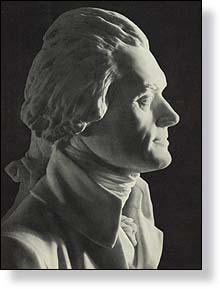
Ellison sought out Goode and shook his hand in a gesture of good will. The Koran Ellison used was once owned by Thomas Jefferson.

This from CNN:
WASHINGTON (CNN) -- On his first day in Congress, Rep. Keith Ellison, D-Minnesota, the first Muslim elected to Congress, finally met the Republican who criticized him for his decision to use the Koran at his ceremonial swearing in.
Ellison asked another Democratic member to introduce him to Rep Virgil Goode, R-Virgina, who spoke out against Ellison in a letter to constituents last month. Ellison told CNN that he approached Goode on the House floor and the brief meeting went well.

"I shook his hand and shook mine. We greeted each other." Ellison asked Goode to grab a cup of coffee with him soon and Goode accepted.

Asked if he was felt singled out as the first Muslim member, Ellison said no and added, "By reaching out to Congressman Goode I'm not trying to be accepted, I'm trying to build bridges. In this world there are too many misunderstandings. I want to put a human face on things."

Ellison was sworn in with other House members on the House floor. Later, at a ceremonial, photo-opportunity swearing in with Speaker Nancy Pelosi, he chose to use a Quran once owned by Thomas Jefferson instead of a Bible.

Last month, Goode wrote a letter to his constituents, stating, "The Muslim representative from Minnesota was elected by the voters of that district and if American citizens don't wake up and adopt the Virgil Goode position on immigration there will likely be many more Muslims elected to office and demanding the use of the Koran."

Ellison shrugged off the intense media attention at his ceremonial event, saying, "I figure it's all part of it and I take it all in stride."
In the meantime, President Bush is nominating a Muslim -- Zalmay Khalilzad – to be the United States ambassador to the United Nations. Kalizad is the current ambassador to Iraq. There is no response yet from Congressman Goode.

Thursday, January 04, 2007

The problems with Virginia’s term limits

There is an article in this morning’s Richmond Times-Disptach polling former Virginia Governors on their positions regarding a proposal by Governor Tim Kaine to lift the one term limit and allow the voters of Virginia to elect their governor for one successive term:
Former Govs. L. Douglas Wilder, Jim Gilmore and Mark R. Warner favor a proposed constitutional amendment that would end Virginia's stance against succession. Virginia is the only state that does not allow sitting governors to succeed themselves.
Gov. Timothy M. Kaine and House Republicans are discussing a proposal in which the governor would give up some of his appointive powers in exchange for Republican support for two consecutive gubernatorial terms.

Former Govs. Gerald L. Baliles and Linwood Holton favor one six-year term. Former Govs. Charles S. Robb and George Allen prefer the current system.

A governor can serve more than one term, but not successively. Mills E. Godwin Jr. was governor from 1966 to 1970 and from 1974 to 1978.

Holton, Virginia's first modern Republican governor, served from 1970 to 1974. A two-term governorship "puts you in an impossible conflict-of-interest situation" because the governor would begin raising money for a second campaign as soon as he is elected to his first term, Holton said.

"You have got to spend so much time raising money for the next campaign," he said.

But Holton said he would consider consecutive terms if legislators reject a six-year term of office. He said he would not object to the governor ceding some of his appointive powers if that moves the legislature to act.

Wilder, governor from 1990 to 1994, said the learning curve for being governor is so steep that "it takes 18 months to get your sea legs.

"The authority of Virginia's governor is awesome," said Wilder, who is now Richmond's mayor.

The people can make the decision on a second term by rejecting a governor who did a bad job in his first term, Wilder added.

Wilder did not object to the governor giving up some of his appointive powers. A governor can make appointments in his last year, which extends his influence well beyond his term of office, he noted.

While not against two terms, Robb said he prefers one term. Robb was governor from 1982 to 1986.

Four years is enough time for a governor to carry out his priorities, he said. And if the governor does a good job, his successor likely will continue his initiatives, the former governor and Senator said.

Allen, governor from 1994 to 1998, agreed with Robb. The governor has ample powers without worrying about re-election, Allen said. As governor, he felt more continuity was needed in economic development, so the economic development department was made an independent entity free of political considerations, he said.

His successor, Gilmore, disagreed. Two terms would allow program continuity and accountability, he said.

"The American political system is fundamental in permitting voters to express themselves at the ballot box regarding a public official's previous performance," he wrote. "This directly affects the tone of officials' first terms; they know they must defend their priorities during the next election."

Gilmore was governor from 1998 to 2002.

His successor, Warner, said two terms would allow governors to make long-term change. Warner proposed a two-term amendment while governor but was rebuffed by Republicans in the House of Delegates. Warner was governor from 2002 to 2006.

Baliles, governor from 1986 to 1990, said that he favors a single six-year term, because with two four-year terms "you would spend the last two years of your first term campaigning for re-election," so the net effect would be six years.

Baliles said proponents of two terms make a good case, but one six-year term would combine the best of both worlds, more continuity without having to gear up for re-election.

If the amendment is adopted, former governors, who already have served a term, could serve only one more four-year term.

A constitutional convention debated a second term in 1969, but rejected it because the convention thought two terms might unduly enhance gubernatorial powers.

A constitutional amendment would have to pass two sessions, with an intervening election. Because there is an election this year, the question could be put to Virginia voters as early as November 2008.
The proposal is an appropriate half-step towards reform. The ideal system would do away with term limits altogether. Term limits are anti-democratic and guarantee inexperienced leadership with the government run by unseen bureaucrats who are only indirectly accountable to the public. Voters are mature enough to pass judgment on governors' performance and either re-elect them or throw them out of office. Former Governor Gilmore is not someone I ordinarily agree with but for once he is right on the money when he says, "The American political system is fundamental in permitting voters to express themselves at the ballot box regarding a public official's previous performance..”. This proposal is at least a move in the right direction.

Wednesday, January 03, 2007

Ellison to use Jefferson’s Koran

According to Think Progress, Congressman-elect Keith Ellison will use a Koran owned by Thomas Jefferson for a ceremonial oath taking of office tomorrow. This follows complaints by Virginia Congressman Virgil Goode about Mr. Ellison and Muslims in general. There is no word yet if Goode will use the Jefferson Bible for this swearing in.

This from the Washington Post:
Rep.-elect Keith Ellison, the first Muslim elected to Congress, found himself under attack last month when he announced he'd take his oath of office on the Koran -- especially from Virginia Rep. Virgil Goode, who called it a threat to American values.

Yet the holy book at tomorrow's ceremony has an unassailably all-American provenance. We've learned that the new congressman -- in a savvy bit of political symbolism -- will hold the personal copy once owned by Thomas Jefferson.

***
Jefferson's copy is an English translation by George Sale published in the 1750s; it survived the 1851 fire that destroyed most of Jefferson's collection and has his customary initialing on the pages. This isn't the first historic book used for swearing-in ceremonies -- the Library has allowed VIPs to use rare Bibles for inaugurations and other special occasions.

Ellison will take the official oath of office along with the other incoming members in the House chamber, then use the Koran in his individual, ceremonial oath with new Speaker Nancy Pelosi. "Keith is paying respect not only to the founding fathers' belief in religious freedom but the Constitution itself," said Ellison spokesman Rick Jauert.

One person unlikely to be swayed by the book's illustrious history is Goode, who released a letter two weeks ago objecting to Ellison's use of the Koran. "I believe that the overwhelming majority of voters in my district would prefer the use of the Bible," the Virginia Republican told Fox News, and then went on to warn about what he regards as the dangers of Muslims immigrating to the United States and Muslims gaining elective office.

Yeah, but what about a Koran that belonged to one of the greatest Virginians in history? Goode, who represents Jefferson's birthplace of Albemarle County, had no comment yesterday.